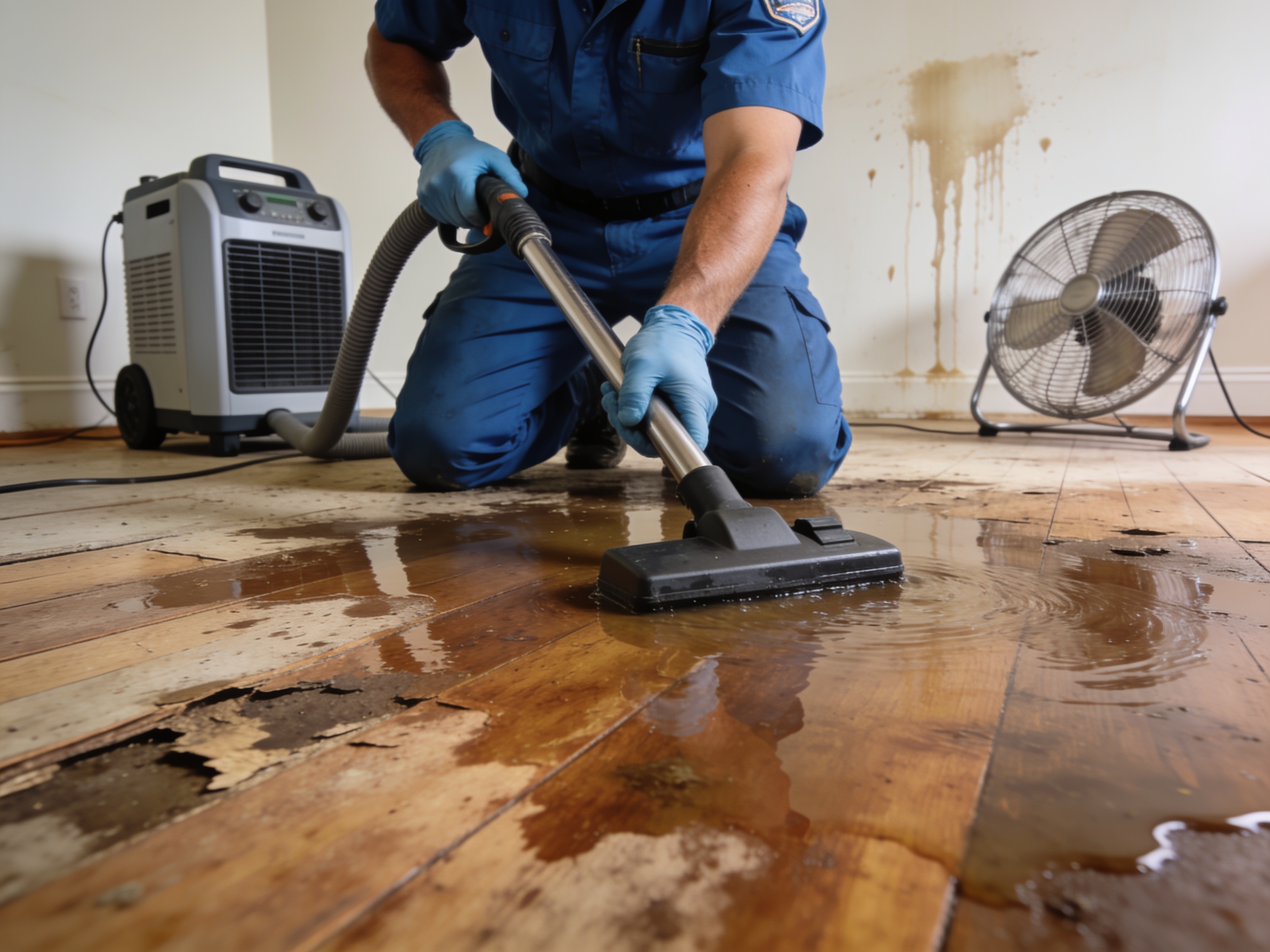
Modesto's mid-century housing stock in neighborhoods like South Modesto and East Modesto often features plaster-over-lath walls and hardwood subfloors that hold moisture far longer than modern drywall. During the dry summer months of the hot-summer Mediterranean climate, surface water evaporates quickly while hidden pockets behind baseboards or under cabinets continue to feed mold. Technicians working these older homes routinely pull baseboards and drill small inspection holes to confirm moisture levels before any drying equipment is placed.
Winter rains and occasional irrigation line breaks in North Modesto and West Modesto create different challenges because the flat terrain allows water to pool against foundations for days. Properties near Graceada Park and the Modesto Arch frequently sit on older clay-heavy soils that slow drainage, so extraction alone rarely finishes the job. Crews here map moisture with meters across multiple rooms and often run dehumidifiers for 72 hours or more to bring readings below 15 percent before any reconstruction begins.
When water reaches living spaces from upstairs bathrooms or laundry rooms in Downtown Modesto homes, it travels along floor joists into adjacent units or lower levels. Local crews isolate affected zones early to prevent cross-contamination and document every step with photos for insurance adjusters. Because many homes here were built before current Stanislaus County building codes required full underlayment, flooring removal often reveals additional saturated layers that must be addressed on site.
Technician insight
In Modesto the thing that catches most people out with water damage restoration is how quickly moisture travels along the original hardwood subfloors in 1950s and 1960s homes in North and South Modesto; you can dry the carpet and still have hidden saturation that shows up weeks later if you skip the meter checks.
Washing Machine Leak In North Modesto
A 1964 North Modesto home had water from a failed supply line travel under the laundry room into the adjacent kitchen. Meters showed saturation in the subfloor and base of two walls. Extraction and targeted drying prevented mold growth; the homeowner returned to a fully restored floor within ten days.
Water Damage Restoration Services We Offer
✓Emergency Water Extraction
Removes standing water from carpets, hardwood and concrete slabs in Modesto homes using truck-mounted pumps and portable extractors rated for 200 gallons per minute.
✓Structural Drying and Dehumidification
Places industrial air movers and dehumidifiers to pull moisture from walls, subfloors and cavities in older North Modesto and South Modesto construction.
✓Mold Prevention After Water Damage
Applies EPA-registered antimicrobials and runs negative air machines to stop mold growth in damp cavities common in East Modesto plaster homes.
✓Sewage and Contaminated Water Cleanup
Handles Category 3 water from backups or flooding in West Modesto and Ceres properties with full PPE, containment and disposal protocols.
✓Hardwood Floor and Subfloor Restoration
Removes and replaces saturated oak or pine flooring and repairs joists in Downtown Modesto homes where water has wicked under original 1950s installs.
Water Damage Restoration Cost in Modesto, CA
| Service | Typical Range | What Affects It |
|---|---|---|
| Initial Assessment And Moisture Mapping | $150–$350 | Larger multi-room jobs in older homes move toward the higher end. |
| Water Extraction | $400–$900 | Category 3 or sewage water requires additional containment and disposal fees. |
| Drying Equipment Rental Per Day | $200–$450 | Number of air movers and dehumidifiers needed changes with home size and construction type. |
| Hardwood Subfloor Repair | $800–$2,200 | 1950s–1960s homes in South and East Modesto often need joist work. |
Ranges are typical for Modesto, CA and confirmed with an exact written quote before any work starts.
How it works
- 1
On-Site Assessment
Technician arrives within hours, maps moisture with meters across every affected room and documents conditions for insurance.
- 2
Water Removal
Standing water is extracted and any unsalvageable materials are removed to prevent further spread.
- 3
Drying And Monitoring
Equipment runs until moisture readings meet industry standards, with daily checks logged on site.
- 4
Sanitization And Reconstruction
Antimicrobial treatment is applied and any removed walls or flooring are replaced to match original finishes.
Pricing
Upfront written quotes after inspection; final cost depends on square footage, water category and drying time required.